
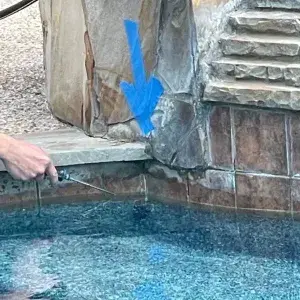
The autofill is the most useful and most dangerous device on your pool. Useful, because it keeps the water level perfect without you thinking about it. Dangerous, because it will quietly cover for a leak — for months or years — while the damage and the water bills pile up.
If your autofill seems to run constantly, this post is for you.
How an autofill works
The autofill (also called a water leveler) is a small float valve, usually in a round lid-covered well next to the pool. When the water level drops below the float, the valve opens and city water tops the pool off. When the level recovers, it closes.
Simple — and silent. Which is exactly the problem.
Why a constantly running autofill usually means a leak
A healthy Houston pool loses around a quarter inch a day to evaporation in summer, less in mild months. An autofill compensating for evaporation runs briefly, occasionally.
An autofill that runs constantly or daily for long stretches is replacing more water than evaporation can explain. In our experience, that almost always means one of three things:
- A plumbing leak — an underground suction or return line letting water out under your deck or yard
- A shell leak — a separated skimmer throat, failed return fitting, leaking light niche, or crack
- A stuck autofill valve — the float itself has failed and is overfilling the pool (check if water is trickling into the overflow drain)
The first two are leaks. The third is a quick valve replacement. All three are worth catching early.
Autofill working overtime? A diagnosis costs less than another month of hidden leaking — call (281) 252-4233 or book online.
Confirm it in 48 hours: turn it off and bucket test
You can't see a leak while the autofill is hiding it. So:
- Turn off the autofill — most have a dedicated valve at the equipment pad or at the fill line.
- Fill the pool to the middle of the waterline tile and mark the level with tape.
- Fill a 5-gallon bucket to the top and set it on the top step. Turn off any water features.
- Run the pool normally for 24 to 48 hours, then compare: if the pool dropped more than the bucket, you have a leak.
Full instructions here: How to Tell If Your Pool Has a Leak: The Bucket Test.
What it's costing you in the meantime
An autofill masking a moderate leak can quietly add thousands of gallons a month to your water bill — plus the chemicals to treat that new water and the energy to heat it. Worse, the leaking water is going somewhere: under your deck, into the soil supporting your pool shell, or against your foundation. The repair gets bigger the longer it runs.
We've diagnosed pools in Cypress and Katy where the autofill had been covering a line leak for over a year. The giveaway wasn't the pool — it was the water bill.
What we do when you call
Our leak detection visit tests the whole system in one trip: equipment pad inspection, pressure testing on every plumbing line, and dye plus acoustic testing in the shell. You get the leak located, marked, and quoted in writing — and many common repairs are done the same day. Every repair is guaranteed.
If your autofill has been working overtime, book a leak detection appointment or call (281) 252-4233. We serve the entire Greater Houston area — and the diagnosis usually takes less time than you've spent wondering.